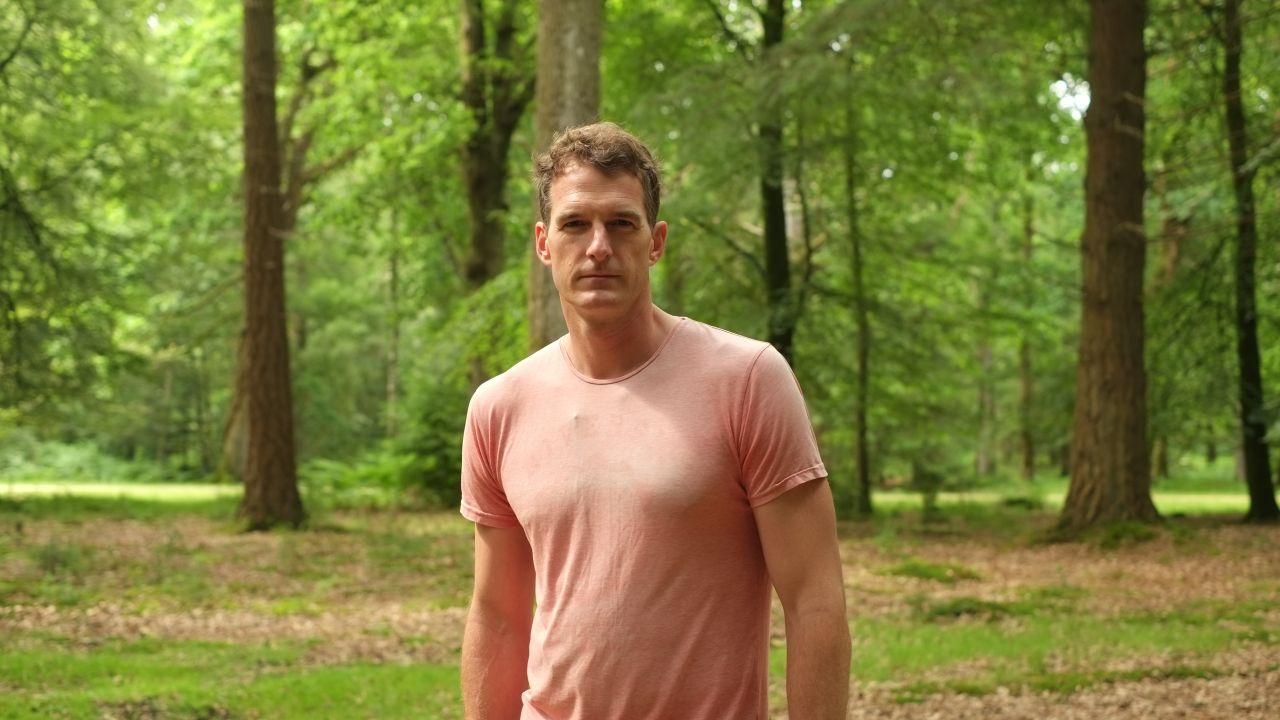
Dan Snow is a television historian who founded History Hit TV to bring a new way of producing real history to people who love it. He talks to Jason about what battles were really like, whether or not he uses scripts, and what the past can tell us about the future.
Jason Kingsley 0:04
Dan Snow is a filmmaker, a television presenter, a best selling author, and the ideal person to help us kick off our investigation into what the past can teach us about the future. I’m sitting down with him for a chat about the state of the world today, the state of the world tomorrow, whether or not there’s anything we can do about it. How do you feel that your own perspective impacts how you talk about history?
Dan Snow 0:43
Jason, when I was 21, I think I knew everything. And there was nothing I didn’t know about history. And now the older I get, the more I think, yeah, my goodness me. It’s also contingent on who we are. And what’s going on now, though, because suddenly I read every history book. And all I read is Donald Trump, Boris Johnson, climate breakdown, I’m just reading about, you know, contemporary issues, even though I’m reading about the Medici. Or I’m reading about Chinese history recently. I just keep feeling: “Oh yeah, that’s exactly like Jeff Bezos at the moment, you know, and all the you know, the privatisation of our space endeavours and things like that. So I think it’s I’m hopeless, I’m the worst. I think I’m always putting myself and my world, into the past whenever I read it. I did a really interesting pod the other day with a woman who’s writing about working motherhood, you know, this extraordinary transformation in history from sort of women who work and then they’re sort of in the domestic sphere and then they go out to work and how and when that all occurs. And she was saying that her experience of living through lockdown and trying to be a working mother and homeschooling and things – even though she studied this for years and wrote a prize winning book – she said it’s transformed her opinion on writing the history. So I think we are really important in the way that we think about the past, surely.
Jason Kingsley 1:51
Yeah, I agree entirely, that I think the now reflects how we interpret the past almost entirely. It’s very difficult to put yourself in the position of somebody and remove knowledge. I was looking at the Mappa Mundi the other day and thinking what an incredible artefact that is. And yeah, it was it was a tourist attraction, apart from anything, you know, you’ve gone all the way to Hereford Cathedral, what else can you pay a penny to go and see. And the Mappa Mundi is the summary of the of the world with Jerusalem at the middle and heaven at the top. And it’s almost a mind map. And I’m not sure that anybody really thought it was actually geographical as much as a sort of a reflection of how the world was seen at the time by many people in the West. And I wonder, when we look at Magna Carta, for example, and the things that run up to that, and we reflect on it – I think it’s only four clauses of it that are actually relevant anymore – a lot of it was about fishing, which is fascinating. When I read it, it’s obsessed with fishing,
Dan Snow 2:48
Fish traps, and religious things. Yeah.
Jason Kingsley 2:52
But it’s so hard to put ourselves in the minds of the people that were there fighting for what they saw – because it wasn’t ordinary people’s rights, was it? It was more about the barons can’t be abused, and had their own armies, than about ordinary people. There was no consideration really, for “ordinary” people. But when you’re presenting when you’re putting together your ideas for history, how do you start with them? And how do you reflect on it? Do you write scripts? Or do you extemporise? And as you’re presenting, explore the idea.
Dan Snow 3:26
Well, so much, Jason, that’s interesting. And I think just on your first point about the Mappa Mundi, and all that sort of stuff, I think, isn’t it interesting also how this year suddenly, with the pandemic, Black Lives Matter, awareness of violence towards women that we’ve all had here in the UK recently, and maybe around, you know, the big government versus little government – maybe big government’s back, it’s kind of useful when there’s a giant pandemic on – And also, as I keep thinking of the list, but also the reemergence of like, great power rivalry between China and the US between arguably China, Russia, India, suddenly, those things that I wouldn’t have been sensitive to if I’d written it when I was writing a book about the Battle of Quebec 10 years ago, suddenly, I’m like, should I have talked about slavery more in this book? Like, it’s kind of weird, or should I have talked about… just your choice of adjectives? And it’s, it’s so true. And when I go back and read history books, written in the Edwardian period, they were condemnatory of Henry the First for like, wearing stupid clothes and being a bit of feminine and possibly having sex with men, you know, like, that was like, absolutely devastating. Whereas we tend to probably go: “Wow, their treatment of women was truly remarkable in this period, or their embrace of violence as a practical, everyday tool of government.” That’s something Edwardians, maybe, were a bit more chilled about. I think it’s so interesting. In terms of how I’m working at the moment, well, you know, like you I’m kind of really embracing and really, really enjoying this new world in which we’re living around digital content So now most of my work is online. And it’s either sort of podcasts or TV shows, but I don’t write scripts like I used to, because I think writing scripts in the old days, there were a lot of gatekeepers. Certainly when I worked at the BBC, and there’d be levels of command, they’d want to see a script, they want to make sure you weren’t gonna embarrass them or the BBC, and sometimes that was absolutely right. They had a very high standard of factual accuracy at the BBC, which was great and remains, particularly in this fake news environment that we’re now in, really important. But a lot of it was also just around everyone want to chip in with ideas, and I think you’ve moved into moviemaking. I’m sure you’re very much cutting a different path. But, you know, traditionally, within movies there were these hugely bureaucratic processes and scripts went in one end and came out the other about something completely different, virtually. So I’m moving away from scripts now and trying to keep it a lot fresher. And I know from your online work that I’ve watched it, you’re you’re a big believer of freshness. I love now just going out and I was out kayaking the other day out here off my house, we went out to Hearst Castle, one of Henry VIII’s castles where it sadly undermined by time and tide, and it’s collapsing into the Solent. And it was just like, right, no script, it was the day after the collapse happened. Let’s get out there. It was, you’ve got your bullet points or things you want to cover? You know, in that way, I’d be really interested in actually how you were because you come from a gaming world. Do you have to storyboard? But you know, I had my bullet points. And then I thought the audience want to hear freshness. As long as you’re delivering that content, and you’ve always got what we call in the industry, voiceover – for your listeners, that’s when you’re watching pictures, and it’s the presenters voice just kind of mysteriously appears rather than a piece to camera where you can see them talking, the voiceover is the bit where they add their voice to pictures later – and you can put a lot of the heavy content in there, if you want: “In 1542 this happened…” So if you don’t remember everything you want to say on location, that’s fine. Because I believe the bits that are interesting on location are the stuff I see you do: my sword arm is just absolutely exhausted, this is my horse is behaving this certain way. And so I was out there talking about the Solent tides earlier here, in my kayak, that’s the stuff you can’t replicate. There’s also stuff it’s hard to script because you want to talk about the tides, well, if you go at the wrong time of day, the tide is going from left to right, not right to left. So I was in meetings when I was a kid broadcaster at the BBC. And they were like, you know, make sure you mentioned here about the big crowds of people that go to this shrine every weekend like. Well, hang on, we’re not gonna be there on a weekend, there’s gonna be no people. Leave it up to us, leave it up to your field agents to work that out on the day, you know, and there were these people in the office who didn’t want to give too much power to people going out. But now I’m completely on the other side. And much more swashbuckling, I believe in getting out there, finding out what the story is, having your facts, having your bullet points in your ammo case, but using them as in when the situation and let the pictures and the the action kind of tell a story and carry the narrative.
Jason Kingsley 7:46
I’d agree with you entirely. I think authenticity of voice and your immediate response, you go somewhere – and you might have read about it – but when you go there and experience it, it might bring out a whole different area of thought for you. I mean, there’s a story about jousting, closing my visor, and then a fly flying into my helmet and buzzing around. For me when it was happening, it was a bit distracting. Then afterwards, I thought, that must have happened in history, but nobody would ever write about it. It’s a very personal experience. And it’s funny, but also distracting and potentially could be lethal that kind of small moment. But it’s the sort of thing is one of the reasons why I love the horses. And I like actually trying things out because the personal experience is quite rare. I love my book history, and I love the the whole academic side of it, and the studying old documents and things but they are one perspective on history, and often written from a clever perspective or with a view to the legacy you’re going to leave behind when you write the book, as opposed to complaining about the quality of the copper that’s just been sent to you because it’s rubbish as in some of those early Mesopotamian tablets, or our ordinary lives. It’s something I’m fascinated by. Kings and emperors are wonderful. But what what are ordinary people’s lives like and how do they brush their teeth? How did they make fire? What did they do to get up in the morning? Like we all do? You know, how do people wash? Because hot water is a rare and expensive thing? You’ve got to be washing in cold water? A lot of the time, it’s not very nice to be honest.
Dan Snow 9:32
Jason, this is what it is to be a weird historian. Certainly history fans like you know but for anyone listening this is what it is. Every time I’m in a hot shower, I think this is a bloody miracle. I’m in a house. I’m not even on the ground floor. There’s a system that pumps hot water onto me and changes my day. Every time I have a shower, which is essential to well being and, historically speaking, that’s a kind of miracle. Only kings and emperors would have had that, you know, 1000 years ago. It’s a marvel, isn’t it? But I think, Jason, you’re in a wonderful position because you’re answerable to no one. You’ve built this empire up by yourself. You don’t have to worry about anyone there, there are no gatekeepers, there’s no one who you’re trying to impress. And I think what’s great, but you know, this is what I’m interested in, I suspect, other people can be interested in it too. And it is the, it’s the bits of, I mean, the fly in the visor’s great fun. People always read about TV history. Nowadays, we’d call it, I don’t know, online video history. And because one of the things you have to do, as everyone who’s watched TV shows knows, as a presenter, you’ve got to go in and try and row the Viking ship, or try and shovel coal into the firebox of a 19th century train. But I can honestly say I feel it’s been a great privilege for me to do those things. And if and when I ever did want to return to try and being a proper historian, it will have made me a much, much better historian. Because there are certain things that only become very clear, and they become instantly clear. It’s like standing on the deck of a ship and getting seasick like: Oh, I’m now seasick and everything has changed. Like something I experienced the other day, I had my first kind of adult, chronic pain thing, a little thing, thank goodness that got fixed, but for a couple of weeks, I was in pain constantly and I thought this is the shittiest experience of my life. If someone walked up to me and offered me 2 million pounds, if I could have this pain for another year or two years, I would immediately say no, it would be a no brainer. So many people in the past, decision makers, they would have been living with chronic pain or with bereavement, savage bereavement issues, kids dying plague, who knows? And that’s something that I just don’t see in books. I just don’t see that. Everyone’s like: Wow, it’s so fascinating. Why did that King decide to do that? It makes no sense. Perhaps it was because of this. No, no, no, no. What if it wasn’t? What if he was like James the Second, not putting up much of a fight against William the Third when he landed in 1688. What if it’s because James II had these chronic nosebleeds. The weather was terrible, it felt kind of apocalyptic. And he just completely as we all do, every day, he just lost his morale. And there’s no deep statute law or texts or kind of 17th century philosophy that explains it. It’s just he had an absolute shocker. And collapsed as you and I know. I certainly I think I think that stuff is important. I learned so much sailing this Viking boat. I mean, I’m sure you’ve done it a bit…
Jason Kingsley 12:40
It’s something I really want to do…
Dan Snow 12:42
Right? Because it’s right in your ballpark. We left Rosskilda and we sailed north and we were going up Jutland. And we were eating the stuff and we were sailing the ship and, and then the weather – he said, “Look, we haven’t got Google Maps or anything. We haven’t gotten that chart. But you know where Sweden is, because look at the clouds.” You just know when you look at them, the clouds are completely different overland. Even though you can’t see the land. The Baltic is a very good place to learn how to sail and it’s kind of safe. And then we ran in up the beach, we had a problem with something holding our rudder to the side of the ship. Turns out you need a sapling silver birch tree, and you stick it through and then you use the roots to tie the roots around the steering or, and then you bring it through a hole and that lashes it to the hole basically, then you have a steering wheel. And we went into a supermarket carpark and chopped a tree down. Well, as you know, in the supermarket, they’ve always got those little, they always plant those to try and make the community happy. And we ask permission and then we chop the tree down. And we just carried it off with us. And he just thought my god every single thing on this boat. As long as you’ve got some iron ingots as you know better than I do, but you need a bit of iron around. Take that as ballast. But as long as you’ve got that wherever you stop, you can make fire, you can do blacksmithing and you can basically make that boat again, if you’ve got what you’ve got the techniques. You can go, “Oh, well, we have to replace 10, 12, 40 planks.” That’s what you can do and being out with them and experiencing that was knowledge that you could not gain from a book.
Jason Kingsley 14:15
Yeah, it’s the knowledge. One of the things that we often forget is the incredible adaptability of the human mind to solve problems. If you really have to, you know, you’re there, you’re stuck, you’ve got a plank that’s gone on your boat. Okay, we’ll fix it. As you know, you have no alternative. You can’t phone anybody and ask for rescue. The nobody’s going to come that there’s no admin either. I often feel like the world is controlled by bits of paper that allow us to travel from x place to y place and we’ve got to get permission for this and this is the way it’s done. But back in those days, it was we have a boat. We have a bunch of brawny lads and we have weapons because that’s an important part of it. Who’s going to stop us? Only somebody who has more brawny lads and weapons because we’re going over there to explore, and the nature of exploring is that they might have to fight. And because death was ever present, you know, child mortality was awful. And you would be killing animals to eat them. Even if you didn’t enjoy it, you would be doing that. So, so the idea of death and life was very different than it is now. I mean, I’m guilty of this as well. But, you know, death for modern people or for most people in the West anyway, is very removed, mostly of all the time, it is largely quite removed from us. Whereas in earlier periods, in the mediaeval period, in particular, it was very immediate and very apparent. And as you say, I mean, Henry the Eighth had that suppurating wound, for decades, that stank. And you know, he’s a powerful king and ex-sports star, by the standards of the time, tall, very handsome, incredibly wealthy, decided to be in charge of his own church, so he’d even got that on his side. And there was nothing he could do about the pain and the stench of his leg. And he would have been completely aware of it hurting and distracting him at every moment, even in the most intimate moments of his life, he’s going to be in pain. And you know, I lived for two weeks with tooth pain. And quite frankly, it was extraordinarily debilitating. And it was such a relief psychologically as well as physically to get rid of it. But imagine being that all powerful King, who can’t get rid of that pain at all. You will even see the cutout in the Royal Armouries on his armour. There’s a piece missing and one of his greaves, which is where they suppose the suppurating wound was. But imagine the psychological impact on you, let alone the stench that would have been coming from that kind of wound. Yeah, amazing he wasn’t worse, to be honest.
Dan Snow 16:55
Well, I agree. I completely agree with that. And I’m very struck as well, the thing I struggle with, with history about death, and our relationship to it is that I’ve been very, very privileged in my life. And I’ve been absolutely incredibly lucky that the only people I know who have died, I’m 42 years old, the only people I know who’ve died have been really old, you know, intimate to me, close, close family and it’s been a great loss. But I’m very, very lucky. I know that’s perhaps unusual, even today, but it would have been unheard of in in in the 15th century. And I don’t know whether sometimes there you read about these lives. Now, of course, you’re reading about the kind of exceptional lives because that’s the ones you read. That’s why you’re reading them. But they just lived with a certain velocity, a certain energy that you makes you think maybe they weren’t worried about their pension. We go: it’s worth putting five years in this company, because you might get you know, maybe I don’t know if I’ll be alive in five years time. So maybe there was a pace to their life but we think we live fast-paced today. But I mean, some of these characters that you read about were getting in scrapes. I just did a podcast on Cellini that Renaissance artist I mean, he’s lived harder than any rock star today, any soldier, any you know what. There must have been a sense that this could all end tomorrow, frankly. I buried my siblings I buried my kids, I’ve buried my friends. Was there kind of a “Let’s live for the day” kind of spirit among so many of the people that you’ve studied, particularly in in your field?
Jason Kingsley 18:21
I think very likely actually. The idea that disease death, you know, violent death often was was around the corner. And let’s face it, if you don’t have police, a fairly recent invention, I mean, he you know, he had somebody murdered, there’s a hue and cry, and there’s all these sort of, but if you can get away, the communication is only as fast as a fast horse. And if somebody is badly on a fast horse, they’re ahead anyway, and you can ever find them. But I agree. I think there’s a certain fatalistic approach to it, which is, I’m just going to go off and have adventures. And I wonder whether that’s a Viking thing, whether in fact, it’s not about rape and pillage and thievery. It’s just about Come on, lads, let’s go and do something interesting with our lives. And it’s sailing that direction and see what adventures we can have. And sometimes those adventures turn violence and pillage and all sorts of bad things, but sometimes they discovered whole
Dan Snow 19:15
continents. Yeah, I was reading about Polynesians the other day that you know, as well as the Vikings. I think the most remarkable maritime culture in our history and the Polynesians there was a sense that they weren’t chased out of their homelands or by like a lack of material resources or you know, there was an idea that the Vikings there was a bit of a population explosion maybe not enough arable land and that those kind of reasons but reading about the punishment just did seem to be particularly young men but young people going no let’s let’s let’s live a life less ordinary. Let’s try and make a name for ourselves and go beyond the horizon and I can’t think that’s right. And I was reading about 18 set we again we needed century which is you know, we think about press gangs and the Navy was so hard and it was run sodomy and the lash and and actually there was a no Almost amounts of volunteering for the Navy in in the 18th century. And I think lots of people like a young Captain James Cook, who then became captain, he had a life on the Collier’s of Eastern England go from Newcastle, London. And he chose to join the Navy, he volunteered. And I think it was the path of a life adventure and potentially financial gain as well. But I mean, life tied to a smallholding in early modern, or mediaeval England would have been pretty grim and never travelling 30 miles from where you were born. I mean, like, I think swapping that for adventure and, you know, potential route, great risk, I think would have made sense.
Jason Kingsley 20:35
Yeah. And also, you know, that the power of actually being fed as well, because, you know, in our immediate society, we can always go down, or we can’t always but you know, the moment we can go down to the supermarket and get food at the drop of a hat, and many people don’t have any food in their dwelling, they know they’re going to go somewhere for the next meal. Whereas back then you had to grow your food or buy it from the local area, or, and it might not be available, and you might be hungry. And I think it’s easy to underestimate the value of you’ll be fed three square meals a day in the army. And yes, you’ll be treated in a rough way. But you’ll actually have adventures and you’ll be fed. And that’s incredibly compelling to most young men. Young women obviously weren’t invited. But the young men being told, yeah, your alternative is to do what your dad has done, which is follow this plough, backwards and forward, and the answers of these oxen backwards and forwards, or risk everything, your life included, but who cares, because you’re young, and nobody thinks they’re going to die. And you can have adventures in far off lands and possibly earn riches and meet strange people. I mean, if you think about it, from that perspective, I’m surprised they even needed press gangs. I’m surprised they actually ever needed to force people into the boats. It’s fascinating, fascinating period, and then never leaving the ship. Unfortunately, for quite a long time. That doesn’t sound very good either. What happened to the adventures that will come in the few years? Really? Yes. Yeah, I mean, the idea of Napoleonic recruiting sergeants as well. And the the idea of the king shilling and then the king shilling being taken off you for all your equipment. I was sort of strange, but I can understand it from their perspective. And as historians or amateur historians, in my case, I think you’ve got to try to put yourself in their position, and understand the world as best you can. Not from your own perspective of hot running water, easily available food, perfect communications, and ability to speak to anybody with a magic box pretty much anywhere in the world simultaneously. These are things that were literally fantasy or impossible to even conceive of, not that long ago.
Dan Snow 22:48
Yeah. And the hardest one, of course, is the footnote. Well, one of the hardest one for many people is first world war infantry, you know, the idea that these young men climbed out of those trenches. And it wasn’t just a fear of being shot by their own sergeant, it was seems to be that they were willing participants in those attacks that we now know, had very little chance of success. And many of them were killed, Shot machine gunned and and blown to pieces by shrapnel and left a dangle on the barbed wire. And it’s, you know, I’ve been at the centre of a few internet storms, and most of them very deserved. But the one I was most interested by was when I tried to just write about what motivated those first World War soldiers, and the fact that many of them enjoyed many of them, not all of them some, you know, many of the millions of people who served it kind of enjoyed their experiences in the First World War. And as you say, there was food. There were long periods out the trenches. There were long periods of being behind the lines and the camaraderie, the sexual opportunities, the travel, the money, you’re making money. Some of the risks didn’t seem quite as severe as they do now. Because being an industrial commodities, being in a mining community in 1910, you’d have been used to catastrophic loss of life, in the most appalling circumstances imaginable, buried underground, you know, all that stuff, explosions of gases. So there are a whole bunch of reasons why, for us, the choices and experiences of that generation just seem like you know, inexplicable, but at the time, as you so rightly say that it you know, these things make sense that it was a shocking experience for many, many of them who lived with debilitating physical and mental wounds for the rest of their lives. But for many people that they could have got away with if they’re in the right place at the right time. war could have been perhaps even enjoyable. I mean,
Jason Kingsley 24:37
it’s interesting, so brought up the idea of what we understand now as PTSD and the long term mental effects of combat. And I always wonder, when you look back through the historical record, do we see potential examples of exactly those phenomena, but not understood the Battle of touton people slaughtering each other in the in the 1000s by hand, you know, literally seeing somebody there and smashing their face in with a hammer. And doing that repeatedly. Surely that would have generated just as much PTSD in those people. And can we tease that out of the historical record? Or to what happened to these people afterwards? Did they become travelling vagabonds, presumably, there was a certain amount of suicide afterwards, you know, people that couldn’t cope with it, and all the things that would manifest. And we would understand more today, back in the old days, I mean, did the ancient Greeks suffer from PTSD, those phalanxes that they had and people being stabbed to death or crushed or just doesn’t bear thinking about and his history filled with people with these problems? I think probably the answer is yes, but we just don’t know about it very much.
Dan Snow 25:46
Yeah, there was a great professor at my university, who said, was it worse to drag a pike in the 30 Years War when armies just ripped apart by starvation and typhus and dysentery? Or was it worse to be a British German servicemen the First World War and it’s some of the ice you start to sort of crunch the numbers and obviously, there’s something unique about the first of all, because of the kind of industrialised slaughter the randomness of death, potentially, they’re sort of, you know, you could like stolen steel, he’s behind the lines. And suddenly, his whole platoon is wiped out by a stray British shell. And it’s that I think that nature of the kind of randomness, arbitrariness, no safe areas within reason, I think that must have been particularly weird and must have discombobulated people. But yeah, watching your mates cough their guts out, and, and, you know, bleeding out in any of these conflicts and with casualty rates per capita, far higher than the Battle of the Somme, you know, not unusual for armies lose half their strength in battles that you’ll have covered. And I was, you know, looked at and, and so I agree, or the only I’m really it’s funny, you said that I’m quite interested in if anyone’s listening and wants to send me an example. I love raking through early sources of any reference for PTSD, that there are some from the Battle of Trafalgar, the opponent was to the early days of bethlem Hospital, which gave is named as a Bedlam, the expression. Many of its early inmates recorded in inmate like 19th century visitors would say all that, you know, quite obviously, there’s a few people in here from the, from the French wars. And it’s like, well, obviously, that’s fascinating, you know, so there were absolutely former servicemen who were at Trafalgar Waterloo elsewhere, whose minds have just been terribly, terribly damaged by what they’ve seen. Imagine the GM deck of a, of a ship in that period, you know, cannonballs coming through supersonic, splinters, cartwheeling around razor sharp, ripping people in half ripping people, open, decks, painted red, so you wouldn’t notice the amount of blood on the deck. I mean, I defy anyone to think that was somehow better or nicer than the industrial warfare of the 20th century. So I think definitely, it’s an area that I’m totally fascinated by. But as you say, anyone who, who who saw the bridge of dead at Talton across that river, it they must have they must have been changed. Surely,
Jason Kingsley 28:01
you would think so? You think because we, as human beings, we haven’t changed that much our psychology is largely the same. Yeah, we read different educational standards, and probably different expectations of what, what our lives should be, but, but even so that that river that back, running red with blood, is just such a strong, horrible image, vast numbers of men on both sides, and one of those horrible brother on brother battles where nobody is kind of wanting to give up, and everybody is just willing to pile into the slaughter. It’s absolutely, absolutely awful. But I but I wonder whether in the future, so one of the things I sometimes speculate on is, what will we be looking back at as humanity in 500 years on to today’s situation? What will what will we see about today that we think of as normal, that will seem really extraordinary to them. And one of the examples is a couple of examples, just to kind of kick off this thought is, I used to drive along the fosway to get to from Oxford, and occasionally, and driving along there and a little mini my first car very, very pleased to have that. And thinking there must have been Roman soldiers walking along here a few 1000 years ago. I wonder if any of them were thinking what we’ll be here in 1000 years time, what will it be here in 2000 years time? And here’s me 2000 years later, thinking Hello, Roman soldier. I wonder if you’re thinking about me. And then I thought I wonder if the fosway will still be there in some way in another 2000 years? And then looking back at today, how will How will historians look at the Brexit as a major issue, potentially look at the American elections and the all sorts of complexities that are going on in politics in the world, information, storm, fake news, all of this is going to be seen in some kind of context. I always wonder what that context will be. And how they will describe us are, you know, are we the new Dark Age? Is there? No,
Dan Snow 30:02
First of all, I know I’m among friends, when people say “driving on the Fosse Way” rather than the A303. That’s how we should refer to our modern road network. I think that is the most interesting question, isn’t it? I mean, I can’t help thinking, well, first of all, in 500 years time, I don’t think anybody will remember Donald Trump or Boris Johnson, or, well, hopefully not President Xi or Vladimir Putin short of a catastrophic nuclear interstate war that sees a sort of discontinuity of life on Earth, I hope that these kind of political leaders come and go. I think it’s going to be, of course, the internet and technology, this kind of transformation in how we communicate with each other and do business and do everything. Even areas that 15 years ago, we thought were probably pretty safe, like sex and dating and finding partners. Now, the internet dominates that space as well. Who knew? And it may come to dominate medicine, for example, in the next few years, you know, even areas that we don’t know yet. I think that’s something that they will be thinking about. I can’t help thinking that they will find the climate breakdown… fascinating. I mean, there’s guys like me who make all the right noises about climate, but I hop on planes left, right and centre, and I eat beef and I’ve bought electric car, but I’m not out there with Greta Thunberg on the streets, even though I know that this is a potentially existential catastrophe for us all. They might find that a bit weird, they might find that those generations of knew it was coming, and they did bits and bobs around the edges, but they didn’t go on a wartime footing until it was too late. So I think that that’s going to be something that’s really interesting for people to watch as we attempt to decarbonize our economies, and whether that happens soon enough. And the things that we’re able to do to our bodies, right? You know, we’re having these amazing debates at the moment or furious screaming fights about biological sex and gender. They’re partly coming about because we have developed the technology to change many of the biological characteristics from one sex to another and that’s only going to increase. When is the clever pill coming out? You know, when’s the pill that’s gonna upgrade our memories or upgrade our systems? And I think that kind of biochemical side of it is hugely important. And then space. When Neil Armstrong died, I thought he’d got a pretty good chance that he’s the only person from the 20th century who will be remembered in 1000 years’ time.
Jason Kingsley 32:27
That’s really interesting. Because he was first.
Dan Snow 32:29
There’s Mao and Stalin and Hitler, and Churchill and whoever else. Who today has heard of Charles the Fifth or Montezuma? Not many. These political leaders are not that important, even not the genocidal mass-murdering ones. I suspect, if you look back, it’s the artist and the scientist and the explorer you’re more likely to remember, depending on artistic tastes. Who knows? Maybe Mick Jagger, maybe the Beatles will still being played in 1000 years’ time maybe like, you know, Beethoven. We can’t account for taste. So I can’t answer that. But I do think that we’re going to be living on various different celestial objects by that point. And therefore the first man to land on one of them, he’ll get a fair bit of attention, I think, wherever we go in the universe.
Jason Kingsley 33:22
Well, I was also thinking about all the wonderful stuff that various of the space agencies are doing in exploring the planets and landing rovers on Mars recently, and how incredibly detailed those images are, and how we’re slowly building up tiny bits of detritus on Mars. And I was thinking, just like today, some religions build quite complex buildings around a key rock or a special place for their religion or their world belief. I wonder if in 200 years, I think it’s very likely actually that where one of those rovers is right now will be the centre of a kind of grand Mars Exploration Museum, and there’ll be a dome over it and the patch of Mars that’s it’s on, complete with the tracks is going to be visible to visitors as a sort of pristine piece of Mars real estate. And there’s going to be a huge Mars city around it. And it’s just going to be one of those things that Mars school kids go to visit this is, you know, here’s one of the robots, and there’s another one somewhere else, and it just fascinates me that that might happen in the future.
Dan Snow 34:32
Yeah, like colonial Jamestown in the US. Oh, yeah. In Canada, where my mum’s from Fort York at the heart of Toronto is this and now it’s under an underpass. There is a 18th century fort there, which was the beginning of it all, the beginning of European settlement in the area. I completely agree. In fact, there’s a great bit on the archaeology on the moon. There’s a lot of stuff on the moon, you should check it out. You know, there’s a there’s a moon buggy, there’s the Apollo 11 lander. There’s lots of bits of Apollo 11: the flag, for example. So the heritage of Mars and the moon is going to be super interesting. I agree.
Jason Kingsley 35:09
I just love the idea that one day, some school kid is going to be going, “Mum, this is boring. I’ve read about this at school,” and then they’re going on to some other exploration. For me, I found, as I’ve got older, history has become more interesting shifted. I’ve always been interested in knights and castles and dinosaurs, and those kind of big things in my life, and in quite a lot of other people’s lives, but also the sort of human side has expanded. I’ve reflected on what it might have been like to be there. Then through my computer games, which often examine game-playing futures and things like that I always have asked, what is the future? Is there a period in history that you would love to revisit now, to sort of solve a puzzle or explain something that still bugs you? I mean, there’s so classic moments in history, I suppose. But I’ve always wanted to go back to have a look at a major battle to see where the battles are really fought the way we think they were thought,
Dan Snow 36:13
Oh, of course. But first of all, I just love your point about the kid going on a school trip. The idea of going on a school trip on the moon to look at the descent stage of the Apollo lunar lander, which is still there. It’s the spidery-looking bit. And the kid’s like, “Oh, come on. They’re so boring.” I mean, you imagine moon school trips. So yeah, of course, battles. Ever since I read john Keegan, trying to work out – and you’ve spent a career doing this – Well, what what does that mean? Like, what does “charge into that line of infantry, who then gave way” mean? The period I love is the 18th century, and you read about the Battle of Bladensburg or outside Washington, DC, when the Brits take Washington, and it just seems like the Redcoats just marched towards lines of us infantry, and they exchanged volleys and then the US ran away. But what’s the process by which they did that? You know, and in the end, the First World War, an interesting historian said to me the other day, he thinks there was this kind of unwritten rule that you’d go over the top, you would do your best, until the officers got killed, and then when the officers were killed, you lay down and waited for dark and it was then acceptable, the NCOs would then get you back in your trench. They’d go: “Alright, guys, come on. Back we go. Let’s go back.” So as long as your junior, as long as the kind of keen 19 year old from Harrow was up at the front, going, “Come on lads, we might get through the barbed wire here. Let’s go.” You had to sort of go: Right, come on, let’s follow him and do our best. The minute he got killed and the captain and the major. You were allowed to just go, Right. Well, it hasn’t worked. I love the mechanics and you know, in your period, what does it mean: a battle? You know, that expression in the mediaeval: like a battle of troops. We’re talking on the anniversary of the Battle of Tewksbury. And how long did that last? How long would two bodies of infantry at push of pike and as they’d say in a later century, properly at each other, the shieldwall knocking each other to bits, pushing, shoving, was there a clever rotation system that was bringing fresh blood into the front line? I’ve seen it argued in the Roman period. Or did the whole thing just disintegrate? I agree, I don’t feel I know that. And I’ve spent my life reading and trying to look into this. I still don’t feel I know what what Tewkesbury actually looked like?
Jason Kingsley 38:31
Yeah. I mean, how intense was the actual fighting? Because if you think about professional fighters today, with a two and a half minute round, and then needs rest, and not wearing anything particularly. They’re stripped down, they’re super fit, their nutrition is studied, they’re fed. Yeah, they’re being battered around, but they’re properly fighting. If you’re wearing armour and you’re not fit, and you’ve got dysentery, your efficiency is going to be dramatically reduced. And even if you’re standing opposite somebody who’s got a halberd, and he’s having a swing at you, you’re having a swing at him. Are you even going to put much strength into it? Are you all going to stand there, meet eyes and go, you know what, can we just not kill each other? Is that all right? And sort of make a good show of it and then sit down or something?
Dan Snow 39:15
Yeah. And I think what really supports that view is that the winning side of many of these battles suffered so few casualties, even when the butcher’s bill was vast for the losing side. So it really does imply that the lives were lost in the rout. So the minute you start running away, and your cohesion’s lost, as you well know, Jason comes in on his horse and just starts hammering the infantry running away, right? Because they’re in ones and twos, they’ve thrown away their weapons, they’ve torn off their helmets, they can run faster. And you guys just come in and absolutely butcher them. My suspicion is that in the decisive engagement, it’s something else. It’s not pure bloodshed. It could be weight of numbers, it could be the psychopath theory of war. It could be there’s about 15 or 20 blokes who are massively into it, like Harry Hotspur at the Battle of Shrewsbury who just goes on like an absolute rampage or Hadrada at Stamford Bridge and if that is successful in penetrating the enemy shieldwall and then they lose cohesion then everyone just goes, Screw this we’re running away. Or you obviously kill the enemy leader ostentatiously they thought, Well, I’m not dying for Godwinson any more because he’s gone. So I wonder if it’s like, you’ve got your psychopathic. your Bronze Age heroes who are really on quite small scale. Even though there are big armies all the action’s in one kind of tiny bit. Or whether you accidentally end up outflanking someone. At Tewkesbury there’s that weird, completely accidental outflanking where a very small number of Yorkist troops crash into the Lancastrian flank, which just panics everyone and they all run. So I think it’s probably that kind of thing. And having been in crowds, in festivals and sporting occasions, you do get a sense that everyone’s looking, and I’ve been on a few political things which have turned physical, but you are looking at the very small group of people are making the noise and the energy over there, and you get the impression if it goes wrong, then you run. That’s my impression.
Jason Kingsley 41:18
I was wondering whether that’s the whole concept of the heroic archetype, which in fact, is a psychopath. So you know, go back all the way to the ancients. And there were a whole bunch of ordinary people like us and then there were one or two, absolute psychopaths, like Achilles or Hector, who, for one reason or another, probably were genuine psychopaths. Sorry, if I’ve insulted anybody, but maybe they were the ones that were happy to do the slaughter, and everybody else sort of backed away quietly and tried to get on with looking like extras in the background of a movie, Pretending to fight, but sort of tacitly agreeing between them – a bit like the the truce during the First World War in the trenches at Christmas – everybody tacitly agreeing, right now, we’re just not going to kill each other. Right? You know, we’ll let the psychopaths battle it out. And in fact, the sort of heroic archetype is all the psychopaths, a tiny percentage of any army are the ones doing the actual damage. Everybody else is trying not to be spotted by a psychopath or the other side, or by anybody who might get them into trouble for not putting enough energy into that. I sometimes look at old, classic movies, the battle scenes, some of the sword and sandals stuff: Spartacus, or whatever it might be. If you look in the background, you can see people unconvincingly fighting each other, and they’ve obviously been doing it all day. They’re both knackered, and they’re trying not to be spotted by anybody or get into trouble for not fighting well enough. I wonder whether if that movie fighting isn’t actually quite similar to a real battle. The vast bulk of people go, I’ve got nothing against you, mate, I’m really sorry. But I’m not going to kill you either. So just make a show of it, please.
Dan Snow 43:02
Well, I think you’re completely right. And there’s a really interesting whole field of scholarship at the moment about people’s unwillingness to kill people. Famously, at the Battle of Gettysburg, they recovered rifles off the field of battle, and many of them had been reloaded many, many times on the urgings of a sergeant and not discharged. So you just had nine balls in them and, and we know that the proximity to the other human makes that it makes that impulse even greater. So it’s easy to kill someone, as we know, with a drone strike that is from Las Vegas, and you kind of look at video, grainy video of a Afghan compound and push the button and go off and have a Starbucks. Now, for that drone operator to go into that compound and knife everybody there in the guts is the same impact, it’s the same effect, but it’s very, very different. So I think what’s interesting about the industrial revolution is that it made it easier for people to kill people, basically. Nice lads in Lancaster bombers flying up every night, who wouldn’t have thought about punching a German, let alone incinerating them and their family are responsible for their deaths. And of course, all sides did this in the 20th century. And then the ultimate extension that is that one day someone will push a button and obliterate an entire country or parts of a continent through nuclear munitions. On a mediaeval battlefield, where you are staring into the eyes of people, you’re right. You’re gonna be, We’re both here, because we’ve been told to be here. But the aristos, the leaders, the people who gained the most, or sought to gain the most, you can see they might be bloody going for it in the middle. A nasty little, a really unpleasant little gang of 50 or 100 dudes just going after each other in the middle and everyone else kind of slightly watching them to see who gets the upper hand.
Jason Kingsley 44:51
I’m fascinated by the slow adoption of black powder weapons in the mediaeval period. The first sort of hand guns come in around the1380s or 1390s but don’t really get taken up until 100 or 150 years later. One of the things I’m thinking about is that they’re grossly inaccurate, which makes them really random. If you’re nobility, and you’ve got your really expensive horse, and your really expensive armour, chances are only another posh guy with the expensive kit stands a chance of killing you. So you’re broadly safe against the bulk of the warfare, yet some oik with a hand cannon, aims at somebody else and the bullet pings off in another direction and goes straight to your breastplate and kills you. I wonder whether the nobility went, You know what, that’s not fair. I’m being killed by randomness, not by some mighty Knight who’s taken me on. The same with crossbows. It seems to be this tendency to believe that warfare should be not exactly noble, but should be not random. And when you start introducing gunpowder, weapons, artillery, bombing, these become more and more displaced from directed killing. They become indirect killing as you said. Launching a drone strike is, is a computer game. They even use computer game controllers or similar things to computer game controllers. Literally you’ve got layers of glass between you and the target. I wonder whether people didn’t adopt the gun because it was too random. And just level the playing field too much. You have to get down off your horse, otherwise you’re a target. And then you had to not wear the posh kit because you were too much of a target. And then you actually started to direct the battle from 20 miles away via radio. As a general trend the more in charge of the army you are, as armies became more industrialised, the less chance senior people were actually involved in the direct combat.
Dan Snow 46:53
I’m certain that’s right. There’s no honour in it. There’s no honour in getting killed on the battlefield by yucky little smoky weapon in the hands of a peasant, is there?
Jason Kingsley 47:02
No, none whatsoever. In fact, it is arguably embarrassing. The nobility would definitely not want to be killed by an embarrassing circumstance. You want to be killed heroically. You want to be Richard the Third charging in, taking out the banner bearer of Henry Tudor, the Usurper, and and failing heroically, arguably one of the last grand gestures of the mediaeval period. What a way to end a period with a with a with a king losing his kingdom on the battlefield in that fantastic way. Add to that his scoliosis and his physical impairment, what an incredibly interesting person to have a go at doing that. I think we’re nearly out of time, I’m afraid.
Dan Snow 47:44
I could talk about this all day, so let’s make sure we do it again, in person with a drink in hand.
Jason Kingsley 47:50
Absolutely. Was there anything you wanted to promote or mention to the audience? History Hit? Which is great. I’m subscriber
Dan Snow 47:59
That’s so kind of you, man. Thank you for your support from the beginning. History Hit TV is really exciting. We make, you know, proper historical documentaries. We’re trying to get better all the time. We’re ambitious all the time for true history fans.
Jason Kingsley 48:12
Fabulous, brilliant, that’s been a pleasure. We could we could literally talk for another few hours, but I’m aware that you’re quite busy. I don’t know how you do so much. I genuinely don’t.
Dan Snow 48:23
Come on, dude. You’re running a bloody great big, massive, multi-trillion dollar business empire as well as doing all the stuff you do. So I won’t take that from you.
Jason Kingsley 48:31
Thank you for saying so. Brilliant.


All the best in all your new ventures.
LikeLike