with Eleanor Janega
Jason Kingsley 0:02
As you probably know, I’ve always been fascinated by the mediaeval period. So I jumped at the chance to talk to Eleanor Jaeger, about what life was really like in the Middle Ages, what the people must have been like, and what they can tell us about the way we live today. Welcome to future imperfect. What do you think modern people in particular get very wrong about the mediaeval age? What do we make mistakes about in particular, as far as you’re concerned?
Eleanor Janega 0:35
I think that the biggest problem that we have, in terms of the way we relate to mediaeval people is by thinking A: they are very different from us, and B: they’re stupid. That’s the biggest thing. So we are very much you know, what I always say is that if I ever meet the ghost of Voltaire, I will fight him, because a lot of this has to do specifically with ideas from the Enlightenment. Voltaire in particular, was on a big crusade, he was like, The church is very bad, the church is very evil, and anyone who ever, ever was a Catholic was stupid and bad and wrong for going along with Catholicism. Of course, one of the major features of the mediaeval period is that to be a Christian in Western Europe (obviously not in Constantinople) is to be a Catholic. So therefore, you can just write them off, like never a thought entered their minds. They’re often kind of placed in opposition with Roman people. Oh, stuff was great in the Roman period, everyone was very smart and is absolutely brilliant. Then the Middle Ages hit, everyone forgets everything and becomes an idiot. It’s just not true. In fact, a lot of the things that we like to pick at mediaeval people for and say, “Oh, well, you can tell they’re stupid because they believe in humoral theory,” I’m like, “Homeboy, Galen came up with humoral theory. All the Romans believe in humoral theory.” There wasn’t workable medicine. Workable medicine doesn’t come along until the 19th century. So maybe be a little kinder to people for believing that. If you want to be that mad at anyone in the Tudor period, as well go for it, but why is it that we focus on mediaeval people? Having said that, there’s obviously a lot of ways which they are different to us, because part of the reason that those criticisms stand really well is they’ve got a completely different way of thinking about knowledge, for example. They see knowledge or learning as a cumulative process over time between all people. The phrase “standing on the shoulders of giants” is a mediaeval one. It comes from the idea that, Well, there’s the ancient philosophers, and we can get where we can get because they’ve already done this work. We can see that. Systems of knowledge don’t seek to kind of rewrite anything: they seek to build. They’re always assuming that there’s a bedrock of what’s correct and then you simply build on top of that, which makes a lot of sense, but we are in an era where we’ve really changed the way that we think about knowledge. We are saying that you have to consistently say, No, is that true? Go back over and over and over again and double check that this thing is correct. And sometimes you tear down an entire field of knowledge, because you say that’s not correct anymore. No, sorry. We’ve got this proof over here. We look at mediaeval people and say, well, that’s nonsensical. I don’t know how you could relate to knowledge like that. What I try to remind myself of is that a lot of knowledge now is still received. For example, I know that germ theory is real, because some scientists told me that germ theory is real. I’ve just said, Right you are, fantastic. Little bugs on everything, is it? Great, got it fine. Moving on with my life, you know, I don’t check that. So there’s still some elements that are very similar about our life, but we just don’t think about things in quite the same way. That’s a huge cultural shift, really.
Jason Kingsley 3:41
I did a video once on the Mappa Mundi which was really interesting, because this was a fascinating mind map in many ways. People say, Oh, it’s not very accurate map, but it’s actually geographically accurate in certain areas in the local area, in Western European and it gets more and more odd, andthey’re more and more mythologically entwined, the further away it gets. They’ve put Jerusalem right in the middle of it, because their worldview was Jerusalem was it. Then further east, which is up on the Mappa Mundi, you get to heaven, eventually. Literally, you get to heaven, and there’s heaven and hell and gates and sinners and everything. So this map was part Atlas, but also part reference for mythologies. It’s got what we would call real mythologies, it’s got the Golden Fleece, but it’s also got what they considered possibly to be mythology, like the Red Sea, which was coloured red, because none of the people that made it had seen it, presumably, so it’s red. Then it’s got the path of the Israelites wandering for 40 years or sort of squiggle, roughly where they thought it was. It’s got mythical beasts as well and some real beasts. So it’s a sort of collage of real world and getting the further physically away from you, the more mythologies takes over, as we’d understand them. It’s fascinating.
Eleanor Janega 5:03
It’s a really interesting thing. Sorry to just jump in, I’m so excited because I think you’ve really got it nailed on the head here. Because what the Mappa Mundi kind does, you’re right, it’s not a thing that you could take and say, Okay, well, that’s it, I’m going to get in a boat and sail somewhere. But that’s not what it’s intending to do. It’s like a Mappa Mundi is doing exactly what it is you’re saying here. It’s bringing together, Here’s what we know about what actual geography is and here’s where that makes sense in our cosmological understanding of the world. If you are some guy from, let’s say, Northern Germany, to you an elephant is every bit as mythological as, say, the blemmyes, who are the guys will see on the Mappa Mundi with their faces in their tummy, they don’t have a head, or the skiopods who live in Africa, and have one giant foot that they jump around on, and they will lay down and use it to shade themselves from the sun. Who’s to say which of those things are real? And not? If you’ve never left the continent of Europe, you’ve maybe never left Northern Europe, right? What it does is it positions Europeans in terms of how they see the world around them, and more specifically, they don’t have a concept of being Europeans, they have a concept of being Christians. They say, Well, this is what the world is like, here’s how land works, the mythology is all there, right? Because they very much like to have all of the Greek mythology, the Roman mythology there, they’re going to take all of that, but they’re just going to put some God on top of it, right? So you can have the Golden Fleece, but then you also have to have heaven to be like, but just to be clear, we are not endorsing Zeus. So this is how you bring all of history together along with theological worldviews in order to have a map of how Christians see themselves in the world. It’s not a map of the world, per se, but it is a map of society in another and more interesting way.
Jason Kingsley 6:56
I sometimes liken it to a mind map, when you’re studying a subject and you draw the subject in the middle and you can draw little lines off it. Some of them are tiny details. Some of them have big sections. Of course, there is a slightly more practical side of it as well, which was it was a tourist attraction. It was a way of visiting places without visiting them. Obviously, cathedrals needed money. And there’s an awful lot of physical investment in cathedrals. Obviously they’re praying for people spiritually, but you also needed money. As you get more things, as always at Hereford Cathedral, there’s a shrine of St. Thomas there who cured wounds, and you could stick a wounded limb into the shrine to get it cured. You could buy a wax model of your bad foot and take it into the thing and hang it next to the sanctuary and pray for it. Also, then you could go and have a look at the Mappa Mundi on your way and pay some money. It was almost like a theme park, a religious theme park in many ways. So there’s obviously the spiritual side of it. There’s also the journey and the more prosaic souvenirs. As you know souvenirs are really important for the mediaeval mind.
Eleanor Janega 8:08
Mediaeval people do travel. There is this tendency to think you’re born on a farm and you die on a farm. That’s not necessarily the case. People go on pilgrimage all the time, and really normal, average people go on pilgrimage. I am not here to tell you that every single person makes it to Jerusalem, which is everybody’s goal. But you might make it to the local cathedral or not-the-local cathedral, right? If you’re from Hertfordshire, you might make it to Canterbury, for example. That is what is so great about having the Mappa Mundi, because you’ve gone on this pilgrimage of a couple hundred miles, and here you are spring break – Whoo! You’re having a great time – and then you get to see the Mappa Mundi as well. You’re like, Yes, I’m very worldly. I am connected with the conception of travel. This is what the world means to me. It’s also really interesting when we think about like the little wax feet and stuff like that is that this is also something that mediaeval people have in common again with Romans, which is that Romans had the exact same medical practice, Oh, is there something wrong with you? You should go pray to a god and we have lots of little kind of plaster body parts and things that you would go and you would leave them at whatever shrine it was and have a little prayer. So there isn’t really a huge difference. Medicine was not so workable so prayer is as good as anything else.
Jason Kingsley 9:28
They were quite good in that they had practical battlefield surgery and things like that. But I think for chronic things like bad back or anything, I don’t think there was much they could do about it apart from pray. For things like slashes to the face and the arm and arrow wounds, there’s quite a lot of practical experience.
Eleanor Janega 9:45
Yes, it’s really interesting. Surgery is the thing they’re quite good at. They can do ocular surgery, they can do surgery on rectal fistulas, which is extraordinarily difficult. They can do all kinds of battle-wounds. They can reset a bon. If you need to put two things back together, they can figure that out really well. But if you’ve got any kind of bacterial disease, you know, your guess is as good as any.
Jason Kingsley 10:08
I often think about it is a little bit like medical craft skills. They’re actually quite good practical skills. They can stitch up a person because a lot of people had physical skills that are perhaps in decline today – with a few notable exceptions – because a lot of people don’t do these things themselves because they don’t need to, as opposed to back in the mediaeval period. Of course, the mediaeval period is a very long period of time. So we’re horribly generalising when we talk about it.
Eleanor Janega 10:37
That’s right. We’re just doing a quick 1100 years, it’s fine. Exactly.
Jason Kingsley 10:41
I think craft skills and awareness of what bodies were like, came with the territory. If you’re butchering your own meat, you kind of get an understanding of what’s inside animals, and probably inside people as well. Sex, sexuality and childbirth was incredibly risky, and infant mortality was surprisingly high. So the tragedy of life and the physicality of it was an ever present thing. Apart from a few places today in the world, one of the biggest things is the realisation that most children in the Western world will grow to adulthood, whereas it was probably 50/50, in the mediaeval period.
Eleanor Janega 11:23
Oh, yes, absolutely. That’s one of the biggest differences. Even when we talk about infant mortality, that’s really a 20th century thing. It wasn’t until the 20th century that we really tackled it, we do see things get slightly better. But you know, go to any of the Magnificent Seven churches here in London and see the number of small children who are buried. They’re Victorian, yes, but it is interesting as well, because infant mortality is extraordinarily high in the mediaeval period, and that gives people a really skewed idea about life expectancy as well. One of the big myths I hear over and over again, is that, Oh, you would be an old man if you were 32, in the mediaeval period. We’re like, No, because what people are doing is they’ll hear the average life expectancy, and the average life expectancy works out to be about 35 or so. But that’s because if 50% of all people die as infants, so they’re at an age of zero, and then half of the population has a zero. What does that mean, if we’re doing our averages? Actually, if you survive childhood, and for women, if you survive childbirth, so life expectancy is a little bit lower, oftentimes for women, because childbirth is extraordinarily dangerous, then you can live into your 70s. And no one is surprised by that at all. It’s it’s not remarkable. You know, it’s remarkable if someone lives into their 90s, which also happens and everyone’s like, Check him out, a 90-year old, that’s a big deal. There is an expectation about the cycles of life, and that people will make it to their 70s, but it becomes skewed by how extraordinarily high infant mortality is. Again, that’s not a specific hallmark of the mediaeval period. Again, you’re gonna find that among ancient Greeks, you’re gonna find that among ancient Romans. Children, especially small children, until very recently, were very fragile things. Thank God for inoculations, essentially, it’s made a huge difference.
Jason Kingsley 13:15
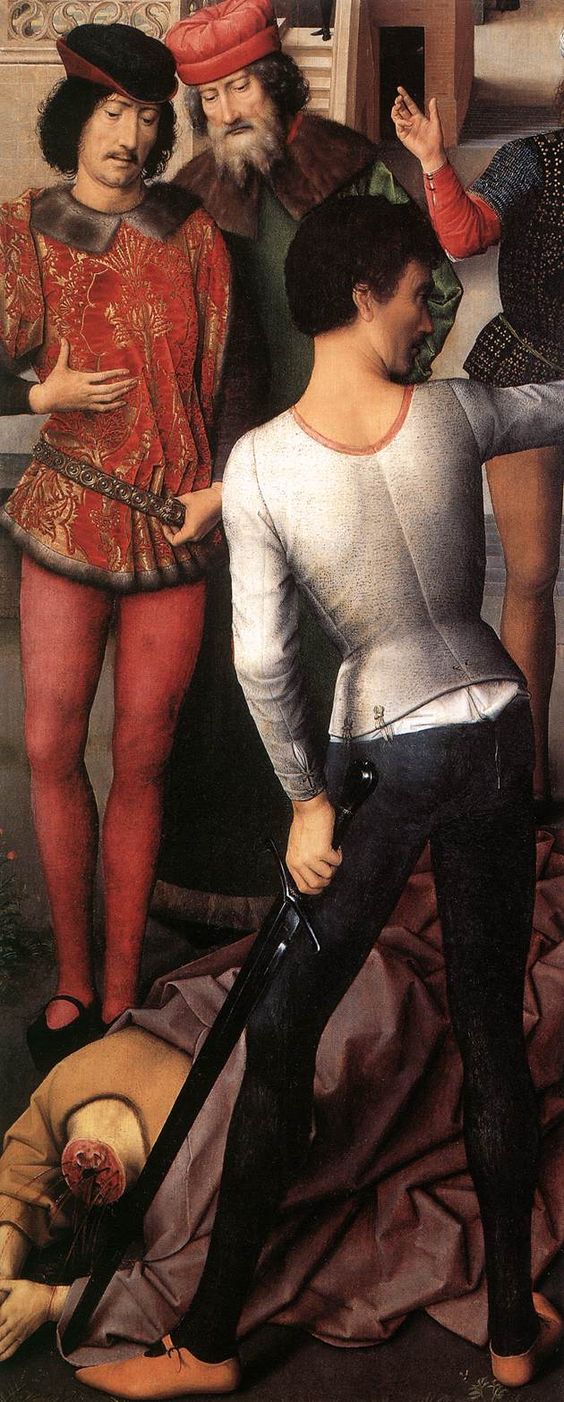
One of the other things I think, that the media in the broadest sense of the word is quite responsible for, is this idea that the mediaeval period is muddy, always muddy. Everybody wears leather, which, which, you know, is an unusual type of gear. Some people did wear leather, but not the way they wear it in TV shows. Everything was sort of subdued in colour. One of the things that I’ve found in my studies is the absolute obsession and love of colour and bright colour in a way that is completely unfamiliar to us today.
Eleanor Janega 13:45
Yeah, we would think that mediaeval tastes are excessively gaudy. Basically if they had a surface, they were like, I’m putting a mural here. This is what I’m doing. So it’s interesting because a lot of this comes to us because the edifices that we still have that are mediaeval are often castles, or cathedrals, and tastes have changed over time. What happened a lot of times is that all of these residences would be plastered on the inside. You build the stone walls, and then you plaster them. Then you take the plaster and you paint all over it, and you paint it all kinds of different colours, and you put some murals on it. So we know for example, from written records that Notre Dame used to be bright yellow inside, with all kinds of paintings all over. This would be very, very common. Sometimes we have records saying, Oh, yeah, it’s painted like this, because someone will have gone to the cathedral or the castle will say this is how it looked. But obviously plaster kind of sloughs off over time, and tastes change but also our relationship to the past has changed. The same is true of Roman statues. We think of them as being these white marble things. They were all extraordinarily brightly painted in this way that we would not appreciate to the point where there was a specific Victorian interest in both mediaeval and Roman things, Victorians would go get hold of a Roman statue and be like, What’s all of this paint? Get this off! They would strip it to make it what it looks like in their head. The same thing happens with mediaeval buildings. If the plaster isn’t in particularly good nick, then we’re gonna get that off. I’m trying to see the mediaeval stone. I want the Gothic experience. But that’s not the Gothic experience. Most people are doing their own kind of like weaving and dye work and making their own cloth and their cottages, they’re growing their own pigments, and they’re like, I’ve got a yellow dress,. Yellow is actually one of the pigments that is easiest for people to make. A lot of clothes are blue, a lot of clothes are yellow, most clothes are colourful. Our best place for things like this are 16th century painting. So it’s not necessarily mediaeval. It’s more early modern, but if you look at kind of like facings of peasants, for example, you know, wedding scenes or parties of any sort of kind, you’ll see all of the peasants there, they’re dressed in red, they’re dressed in yellow, they’re dressed in blue, there’s not a single brown dress in sight. But the way we think about it is it’s like a stone wall that’s dripping water, with someone in filthy rags underneath it, and it’s just not how the world was.
Jason Kingsley 16:16
It’s a very pervasive image. I’ve done a few bits and pieces as a film extra and sometimes am asked to bring my own clothing. I turn up and they’re looking at it going, They didn’t have that bright blue. They did, this is actually woad. But they wouldn’t have combined it. Yeah, they would! We actually have paintings, so there are soldiers in red and white hose, basically men’s stockings. They’re red and white, and they’re going to war with one leg red, one leg white. In some cases, they’re split up into red and blue and you have to look at the slightly post mediaeval but there’s the landsknechts and what they were doing, they’re absurd! The doppel soldiers, the double soldiers are paid twice as much. And they spent their money on fashion. They were literally going to war with enormous brightly coloured hats.
Eleanor Janega 17:03
I love this because you’ll see it in the 14th century one of the reactions to the plague, that some – not all – but some preachers have. So Bishop Thomas Brinton, who’s down in Rochester, he says that one of the reasons why everyone is suffering from the plague is because everyone is dressing too sexually. He’s like, Guys are just walking around in these very brightly coloured tights and their shoes are so pointy and you need to stop that because this is just too sexy. Why are your clothes so bright? Why are your shoes so pointy? Why are your hose so tight? And it’s this whole world where that is so common. Rochester is a fairly good sized town, but it’s not Paris or something. You have this at every level of society, people love to dress up, they love bright colours. They love fashion to the point that fashion is one of the first things that when people start getting a little bit more money for fashion royals are like, We got to crack down on this, these people are getting too fancy. You cannot tell the difference between them and us.
Jason Kingsley 18:06
They actually introduced laws, didn’t they? Sumptury laws. And that was to try to keep people in their station because they had now have too much money. And you can’t wear this because that’s reserved for nobility and nobody be able to tell who’s important to who’s not if you can wear the same clothes as us.
Eleanor Janega 18:23
Exactly. And it’s one of those things where you can tell how much money people have for clothes and we’re willing to spend on clothes, because you don’t have a law like that if it’s not available to people. If you go back to the seventh century, no one is like, Hey, look, you can’t just go flouncing around in furs! All right, you understand me? By the time you hit the 13th century, 14th century, that very well may be the case, so, again, it’s a really long period of time. Especially in the late mediaeval period, they just love to dress up! Neato, they’re not so different from us, we love to dress up now, it’s just we don’t dress as brightly.
Jason Kingsley 18:55
I think we would probably be shocked if we went back into some towns or cities. This is so awfully gaudy and there’s a there’s a place in York – I can’t remember the name – it’s one of the halls in York that they’ve repainted in the style. If you go there, the main living hall has enormous vertical stripes of red and green, painted flowers in various different places, all hand done, so it’s not perfect. There are stripes of bright red about a foot across, and another stripe of green about a foot across and all the walls are covered in these stripes and I’m thinking this is way more gaudy than the most gaudy wallpaper you could ever get in the 1970s! It just blows it away, it’s shocking!
Eleanor Janega 19:41
I love that about them. I love their complete over-the-top-ness and I think it’s a real shame that he doesn’t come up a lot of the time into films. The mediaeval film that I and everyone else in the world is hanging out for at the moment, The Green Knight is just coming out. I’m very excited. I cannot wait to see my very good friend Dev Patel and look at him in a respectful manner. But the thing that I think that a lot of it is like really true to what the story is like, and it’s spooky and atmospheric, but then the only shame is again, you’ve got like, here’s the stone wall, here are the really muted colours that it’s like I would just love wants to see the bright, stupid colours and you know, someone wearing a party-coloured pair of hose. I would love that. I would love it, I would just lose it.
Jason Kingsley 20:27
I would love to see somebody wearing poulaines, really, really pointed shoes. In a way it looks absurd. I mean, there’s a TV show called Blackadder, whether you’re familiar with Blackadder, and what Blackadder was wearing isn’t actually absurd. It is actually slightly understated from all the records we have here because it’s black. So he was actually being subdued in his shoes, his crazy hat, his enormous shoulders. They’re all actually quite authentic in many ways. The pudding bowl haircut is literally cut with a pudding bowl and is what some of them had, if the visual records we have of the time are accurate. I see no reason to think they wouldn’t be.
Eleanor Janega 21:09
I think that a lot of the written records back it up. That’s why you see complaints about it, because people are stating, Yes, that’s what’s happening.
Jason Kingsley 21:16
The older generation is, as they are today, complaining against the younger generation ruining things, or their fashions are outrageous, or their shoes are too pointed, which is exactly the same as today. As you get older you think are the trousers that young people are wearing, sometimes ridiculous. It’s just saying what they’ve been saying since ancient times.
Eleanor Janega 21:40
Exactly, that just means that you’re getting on so never admit it.
Jason Kingsley 21:44
Yeah, we’re getting on to warfare as well, and showing off a little bit. I was having a discussion with somebody about some particularly flash armour with gold on it, and jewellery and everything. And they, they were saying, well, that would have just been for ceremonial purposes. I mean, no, I don’t think it would have been, I think the whole point is to show your magnificence on the battlefield.
Eleanor Janega 22:06
I would agree with that. One of the things that I would have to say about that is that the battlefield is in a ceremony. That’s what you’re kind of doing when you’re out there, especially if you are from the sort of echelon of society where you have access to a suit of armour like that. What I often liken mediaeval warfare to, especially for extraordinarily well-to-do people, is – as I call it – rich guy tag. Because the purpose of war for someone who could have a suit of armour like that is not to necessarily get killed or kill anyone, you want to go kidnap someone from the other team who has the same rank. So you want to kidnap him, you want to hold him ransom, and then you’re going to get a lot of money out of this. Look at the number of times that actual king is captured on the battlefield. How many times is the French King dragged back to England? This is even happening in the early modern period. You know, the Charles V captures Francis. There’s this ongoing Valois-Habsburg rivalry. He’s got him right there. Basically, Francis spends a bunch of time writing Poor Me letters to his mom. That’s what happens, you know, it’s not warfare in the way that we think of it, where two people are like, Alright, that’s it, we’re going to kill each other. That’s never what’s on so you go out there and you say, Yes, here I am. I am a golden god, look at me. And unfortunately, that might get you kidnapped.
Jason Kingsley 23:28
But it protects you in two ways. It says, I’m wealthy, therefore don’t kill me. Because if you kill me, I’m probably worth scrap value. And that’s not nearly as much as if you are going to ransome me. So yes, we’ll fight and my armour will probably prevent me – unless I’m very unlucky – from death. This is, I think, why guns are slow to be adopted, because they’re a little random, they’re very inaccurate, and they will kill somebody regardless of their social status on the battlefield. Armour, broadly speaking, will protect you – mostly, not always -from that kind of lethal combat, whereas your poor ordinary soldier is getting mowed down in waves. It must have been a very different experience. Yhere are battles – Agincourt, for example – where they captured French knights, and the English needed to kill them. But the knights, the men at arms, refused to kill them, so they had to give it to the lower orders, if you want to call it that, the archers to go and slit their throats. That caused absolute outrage at the time, it was a war crime, what we would think of as a war crime. Back then you could justify it, arguably, and there will continue to be arguments about it, but it’s really interesting these moments where it’s the exceptions that almost prove the rule. It must be the same for you when you’re looking into some of these things about the apocalypse and what they were complaining about. Because as you said, there wouldn’t be rules unless people were breaking them. So the apocalypse, this is something I’m relatively unfamiliar with, when it comes to the mediaeval period, I obviously know the Book of Revelations and the whole Biblical side of things a little bit. Tell me a bit about that and how that affected the way people saw the world and presumably it ties into plagues as well.
Eleanor Janega 25:15
You’d be surprised how often the apocalypse comes up. I’ve already made a generalised reference to this. For what we would call Europeans in the mediaeval period, they’re Christians. The thing about them is that they live in Christendom. One thing that we really tend to forget now is that Christianity is a linear religion positing that there is a beginning, middle and end to the universe. There was the beginning when God made everything, Jesus came right in the middle, and then we are now in the end bit, and we’re waiting for Jesus to come back. For the apocalypse to start, there are all sorts of things that are going to presage the second coming of Jesus. It might be the arrival of Antichrist, who is in almost entirely like extra-biblical character that people just kind of made up. It’s kind of fanfiction, but it’s definitely taken on a life of its own. Then there’s the things that are in the apocalypse. The thing is, for mediaeval people who are living, breathing, all the time in Christianity, they don’t see this, as a story that is kind of explicative of their world, they see this as absolutely the truth. For them when Jesus says, I will be right back, you won’t know the depth of the hour of my coming – something that he refers to multiple times in the Gospels. So they’re ready for that to happen, right? So within that context, they’re constantly interpreting the signs of the world around them to say, Okay, well now is when it’s happening. It’s interesting the times that it comes up. So there is a huge tension around the year 1000, for example, so they’re like, Ah, well, in the year 999, everyone’s having a freakout. They’re like, Well, this is surely Jesus going to come back in the year 1000, because it’s a nice round number. Essentially, they really do like numbers to have a kind of specific meaning. They think about math as a kind of divine explication of the world. So if you can kind of figure out math, you’re kind of thinking like God is. So for them, the year 1000 is a really obvious point. People will point out things like, Oh, do you see these Vikings? They’re everywhere. All these these big pagan hordes refer to the hordes of Gog and Magog, who are basically in a lot of the Antichrist theory. So that’s who that is, these bad pagan hordes. Clearly, God’s going to come back and Jesus is going to come back, it’s going to be the end of the world. That doesn’t happen. Then, you know, any time there is a famine, that is something that comes up a lot. So the 14th century is absolutely lousy with apocalyptic thinking, because in the first place, you have the great famine, I think it’s from 1315 to 1317. It’s very, very cold, it’s very, very wet. Two years’ worth of crops fail, and everybody’s starving. There you go, you got famine. So that’s one of the horses of the Apocalypse, right? And then oh, who comes along a couple of decades later, it’s pestilence, the Black Death. And you can be forgiven for thinking if, say, you live in Florence, and 60% of the population has died of the plague, you can be forgiven for thinking it might be the end of the world.
Jason Kingsley 28:18
Absolutely. I mean, in a way we were we’re living through that in the COVID pandemic, I can understand a little bit more about what it feels like, perhaps, and that’s a disease that is killing a miniscule fraction compared to the Black Death. And we have ways of treating it, we know what it is. We know, we understand it, we know what transmission is all about. But if 30 to 60% of your colleagues stopped turning up for work, because they just died of this disease. I don’t think any of us would not consider it was the end of the world, actually.
Eleanor Janega 28:52
In many ways, even under COVID, which is, again, a fairly benign pandemic as pandemics go. Everybody get vaccinated, wash your hands, be careful. One of the things that we can say is that our world has probably irrevocably shifted as a result of this. Our ways of working have changed probably forever. There are the certain things that have really shifted as a result of that, with a much more benign pandemic. How much more would that be the case, when we’re talking about the Black Death, which is, by all accounts, the worst epidemic that the world has ever seen?
Jason Kingsley 29:28
It caused societal change as well, didn’t it? Because I believe that peasants and agrarian workers suddenly realised, Actually next door needs workers and they’re offering to pay as tuppence a day instead of one pence a day.
Eleanor Janega 29:39
Yeah, it’s really interesting because this is one of my favourite things that happens but at the same time, I always say we have to be really careful about it. You will see it, in the first place it starta and they say, Hang on a minute, I could maybe move! Then there comes a big crackdown, because they’re like, Oh, no, the peasants are realising they could move. So at first you will see people going, Alright, that’s it, who’s gonna stop me? I’m moving down the road, I’m going to go get higher wages. And then at times people are like, no, legally we will stop you. So there are multiple laws that are promulgated specifically in England saying you cannot ask for more money. That is it, there is a line. Then you get the Peasants’ Revolt, much more successful than a lot of other peasants’ rebellions had been but it is essentially quashed. Then we do see wages, they go up a little bit, because everyone’s like, Remember when the peasants murdered everybody, okay, we maybe want to keep them happy. Then they stagnate again, for another 150 years. So it’s this really interesting push and pull.I love the peasants’ rebellions. I love peasants, generally. I’m a big champion of ordinary people in history, because I think that everybody is the most interesting people. What I think we can really learn from this is they definitely do shift the way that people think. Again, you start seeing laws saying you can’t pay peasants anymore, because someone’s getting paid more, right? Again, you wouldn’t have a law about it if it wasn’t happening, because you simply didn’t need to before the 14th century you had there were plenty of peasants, no one needed to worry about that. Suddenly, you’re out of peasants, they start realising their worth. The shift that it causes also means that peasant rebellions never stop. Up until the 14th century, you only have handful of peasants’ rebellions, they’re very, very few. Then after the 14th century, they just start happening over and over and over again. We see as many in about 100 years as we have written down for the previous 1000. So something really shifts in terms of public consciousness after the Black Death. Even if they aren’t necessarily what we would call successful, even if we don’t say that, you know, yeah, everyone’s standard of living rises and continues to rise. What we do see is people saying, Well, you know, what, actually, I’m not going to take that this is the way that the world is, and there’s nothing that I can do about it for granted. I’m going to go out and test if this is still the case. And that is something that we can definitely, definitely see shifts completely, you know, until you get stuff like the French Revolution a few hundred years later.
Jason Kingsley 32:08
How did the church react to people getting uppity? Did they say, but your place is given by God and therefore you’re somehow rebelling against God by wanting to be something other than a agrarian worker?
Eleanor Janega 32:22
This is a really interesting one. Because, the church, for the most part, especially at the higher echelons, is just drawn from rich people. No one who became the Pope, or no one who becomes a bishop was born a poor boy on a farm. That’s just simply not the way the world works. Oftentimes, that’s somewhere where extraordinarily rich families kind of send their extra sons, especially for primogeniture, so you just shuffle one along to the church that can be a bishop, they’ll have a great life. That’s not necessarily true of parish priests or something like that. So they do tend to echo sentiments about the rich being in charge of society for a reason. What the church tends to say, is not necessarily Oh, well, this is your status in life, get used to it, you pleb. It’s not so much like that. What they tend to say is, Well, you know, none of this really matters. Your next life is what matters. But there will be all kinds of interesting ways of interpreting that. So for example, I was reading yesterday, a sermon by Humbert of Romans, who is telling other priests how to speak to people with leprosy. He says, You know, people with leprosy, they’re mad all the time, because they have leprosy and they’re so upset with God. And they might turn to sin instead of what they should really be doing, which is being really prayerful, and focusing on the fact that, Oh, well in the next life, which is the longer one and the real one they’ll be fine as long as they get their soul together, so they should focus on that. Then he compares them to Job from the Bible who suffers a lot. And he’s like, Well, you know, didn’t Job suffer much worse than you as someone with leprosy, because Job was really rich, and then he lost everything he had. So that’s worse than if you’re poor and you lose everything. That’s not as bad as if you’re rich and you lose everything. If you have leprosy, and you get sick, that’s not as bad as like you know, something bad happening to a rich, able-bodied person and he literally just puts it down there. I was reading it like, Humbert, what are you talking about? You’re just saying that, in theory, some rich guy who lived 100 years ago had it worse than you because he was rich. So there is that kind of way of thinking but what the church really tries to get everybody to do is focus on the next life. Part of the reason that they do that is because they’re drawn from these very high echelons of society and they have a stake in the matter it’s not quite as much as you see from royalty themselves who are very much, Yes, yes, I am anointed by God. Oh, and by the way, I am descended from a mythological figure. So I’ve got that going for me and I’m simply different from you people, you knos. The very, very well-to-do secular people will really lean on: God has anointed me. Whereas the church never wants to give them too much of that because the church also might want to come in at any time and make you not-the-Emperor, or make you no longer the king. The church reserves the right to excommunicate you and get someone else in. They’re a little more reticent about that, their focus is the next life.
Jason Kingsley 35:22
But I wondered whether one could chart a philosophy of thinking of the Peasants’ Revolt: the Black Death, people starting to realise their worth all the way through to the schism in Christianity? Where you do start to have parish priests who don’t think things are anointed, it’s clear that stuff a bit random, and eventually, after several hundred years of thought, and sort of shuffling of social conscience, we get to the stage of the rejection of the Catholic Church, and the rise of the Protestant church.
Eleanor Janega 35:54
This is my bread and butter. This is very exciting to me, because, again, this is one of the apocalyptic signs that people point to the Great Schism and you know, having your Pope and your anti-Pope in Rome and Avignon. The highest number of Popes you ever get is three. They tried at one point to be, Alright, look, we’re just going to cancel out the Pope in Rome and the Pope in Avignon, and we’re just going to elect this new pope. Then he’s going to be the Pope. Then, obviously, the Roman and Avignon Popes were like, No, we’re not going to do that. So then you had a third Pope in Pisa for a little while. And eventually it all dies out. But yes, you certainly do see this. And so one of my great loves, and one of the groups that I’m really interested in studying the Hussites. They really move on from this. In the first place, they are a kind of post-plague grouping because certainly there are nobles involved in the movement. There are certainly church people. Jan Hus obviously was a was a priest himself before he comes up with this new form of Christianity, and then gets burned at the stake for his trouble as one does. It’s also this really kind of like social conglomeration. So you have lots of peasants who are involved, you have lots of townspeople in some forms of Hussites. For example, the Taborites who are focused on the Bohemian town of Tabor, they kind of tried to start a form of communism, along with their Hussitism. What they’re saying is they have to take an interpretation of Christianity that society should be equal. There’s enough stuff for everybody. This idea of a hierarchy that’s promulgated by the Catholic Church in and of itself is problematic, because it’s saying that humans need to be striated out in this particular way. So I would say absolutely, these things are connected. There’s all kinds of Hussites who write about this such as Chelcicky. People tend to ignore those. That’s because nobody wants to learn Czech, but if an entire kingdom that is the richest kingdom in the Holy Roman Empire in the 15th century, when all this goes down, as well, because it’s got multiple silver mines. It’s one of the most important kingdoms in Christendom, and they’re like, Nah, we’re off. I think there’s something like, five crusades are called against them, and the church loses them all.
Jason Kingsley 38:09
This is this is the thing that people don’t realise. So quite a lot of crusades within what we think of geographical Europe. There was the Albigensian crusade as well, which is largely about money and land. Then the Hussite, one, which has perhaps got a bit more about philosophy and church in it, but the Hussites also innovated a lot of battle strategy. Presumably, it’s considered the beginnings of Protestantism in some ways, but also possibly the Protestant work ethic, which is perhaps separate from the religious side? We can fix things and make things and invent new things. And they had war waggons, didn’t they? They literally had cannon and guns inside waggons drawn by horses, and they would make them into lines and circles. And it was really not mediaeval anymore.
Eleanor Janega 39:03
Yeah, well, this is the thing. It’s quite interesting because arguments can be had for years and years and years about the conception of the military revolution in the early modern period. But you begin to see things like the Wagenburg Technique. Our good friend, Jan Zizka, he comes up with this. There is a lot of hand wringing again, from the sort of people who are wearing fancy gold armour about this, Who are these guys who will not come out from behind these waggons. Then, you know, the Hussites are like, Yeah, now you’re all dead. So we have a lot of written records to indicate that women are fighting as Hussites. A lot of the times also are a little bit more violent about things. There will be specific records where women are like, No, we’re killing all of these people. The guys are like, Ladies, ladies, slow down! And they’re like, No, we’re gonna kill them. You see all of these things that are very unusual in terms of the way mediaeval warfare works within that system. So as someone who is a Czech specialist, for me that’s kind of the line between mediaeval and early modernism. How many Hussites do you have on the ground? Because for me, the minute the Hussites have one, I’m like, Boom, okay, that’s it. The mediaeval period is over. And we’re early modern now. That’s not how everybody sees things, but it just depends on what do you work on, what is your area? I know people who are specialised in the Iberian Peninsula, and they’ll say, Oh, well, the early modern period is over when the Reconquista is complete, and all of the Muslims are kicked out. Well, they’re not all kicked out. There is the small matter of the Inquisition to happen in the early modern period as a result, but when Ferdinand and Isabella take over we think that’s it, here we are in the 1490s and it’s the early modern period. Now, obviously, that can be really different here in England, because a lot of people like the Tudors. Place to place it could all be really different. But one of the things that I think makes that true for the Czech lands is the ways that Hussites are fighting. It’s just totally different.
Jason Kingsley 40:58
It’s perhaps the philosophy behind the fighting as well. People are genuinely fighting to defend their land, defend their way of life and actually kill the others. There was a sort of mediaeval concept of battles as display. You went in there to show how brilliant you were. You had your bright armour, you had your fantastic warhorse, banners everywhere and you were sort of looking magnificent while also killing as well. But killing wasn’t the main thing. There were, obviously – Towton for example – massive number of slaughters. But often you get the feeling that a lot of mediaeval battles were quite performative. They were about display and the Hussites come along and say, No, no, we’re going to stay here behind our wooden walls, and we’re going to shoot the crap out of you, and you’re going to be dead, and nobody’s going to worry about you anymore. People say: when is the mediaeval period? Well, it depends. It fizzles. Nobody ever woke up and went, Oh, I’m not mediaeval anymore. I’m Tudor. But it changed my shoes. No, it’s not how it happened.
Eleanor Janega 42:02
It’s the same thing. You know, with, you know, the end of the Roman period. You couldn’t go up to someone who lived in “Rome” in 476 and say, Oh, well, what’s it like to be mediaeval, now that the Roman Empire has fallen. They would have been like, What are you talking about? They don’t care about this. These are things that historians do to history. It’s something that we do to it to make things a little bit easier. For me, the term mediaeval is useful, because what I’m signalling to people is between then and then. But it’s a: How long is a piece of string? thing, because these same terms can really apply to a different period in different places. And we’re never exactly spot on about what that means. That’s really the work of historians, a lot of the time is just constantly redefining what we mean, constantly saying, Okay, well, given this, then this might be true. We could use this word. You know, half of it is just sitting around and arguing about a word.
Jason Kingsley 42:58
I did always wonder whether sort of this transitional period is of three generations. You have children who remember growing up with you in a certain way, and then they have children, and they remember you telling them about stories of your grandparents. And then by the time you’re the fourth generation, your great grandparents are so far in the past that it’s not really relevant anymore. And I wonder whether you could ever look at things like that it’s just like to go from Roman to mediaeval would have to be at least three generations before anybody went actually I am slightly different than my great grandparents, when they realise it. You can also look at technology as well. I’m fascinated by the slow adoption of black powder guns. They appear as handguns in the 1380s-ish, but don’t really form a decisive component of warfare for another 100 years, 150 years, possibly 200 years. Why? Were they expensive, unreliable? We know they’re noisy and unreliable.
Eleanor Janega 44:03
They’re quite expensive and unreliable. I think they again get into the mediaeval way of thinking about warfare. One of the things that you’re doing in terms of displays also showing your prowess right on the battlefield. So if you’re a king, and you get into it with another king, and you best him and everyone is like, Oh, wow, he has got pike skills! or something like that, then this is something that very much adds to your fama, your reputation. A gun? There’s no skill as of yet, right? Because they’re just not accurate enough. So it’s not one of those things yet. Obviously, it does become a thing where being a marksman with a gun is considered a skill, but because you can’t be a marksman with a gun at this point in time. It’s almost like, Well, there’s nothing you can brag about. There’s nothing there that you can say, Okay, well, I am a really expert military tactician and you can see this. We do see cannon become much more popular before individual guns do because you don’t need to be that accurate.
Jason Kingsley 44:59
Just shoot to that big lump of men there. Exactly.
Eleanor Janega 45:02
And so I think that it is the one-on-one-ness, combined with the fact that there’s no way to show off about it, if that makes sense?
Jason Kingsley 45:13
Yeah, literally no bragging rights. Somebody is dead with a hole in them for a piece of land. And nobody really knows who did it. It’s all over and there’s nothing to write a saga about. You can’t imagine the Vikings writing about it…
Eleanor Janega 45:28
Exactly. The Vikings want to write a saga about a three-day punch-up with a half-dead man. That’s what they want, you know, and there’s no glory in a gun.
Jason Kingsley 45:38
He would have stood there in his mediaeval armour, and then somebody shot him and he fell down dead. That’s not a saga.
Eleanor Janega 45:42
Who shot him? We don’t know. Were they aiming directly at him? No, they were aiming for Snorri.
Jason Kingsley 45:47
It’s the opposite of heroic in a way, isn’t it?
Eleanor Janega 45:50
It is.
Jason Kingsley 45:51
Yeah, I was gonna say because you want to talk about jousting a little bit then jousting obviously, was a display of wealth and skill that was done quite a long way post-mediaeval. The Tudors were jousting, and in Elizabeth’s time, they were jousting as well. So it kept going for quite a long time. And it appears to have been very popular.
Eleanor Janega 46:11
We kind of see it begin to take off – tournaments in general start kind of taking off again in the late mediaeval period. So in the 14th century this is a big thing. If you want to get on the good side of the people, one of the ways that you can do that is by holding a tournament. For example, when Princess Anne of Bohemia comes over to marry Edward and become the Queen here. Everyone in England is not particularly pleased about this because of Princess Anne being Bohemian and an empress. Bless them. The Czechs didn’t even know where England was. They were like, Who is that? What’s an English? They had to go check out that England was a real place, and they’re like, Do they speak any languages? Oh, god, no, they’ve got French. And then there’s this other one – I think, they say it’s English, I don’t know. Everyone was like, well, you shouldn’t be sending an empress over there. That doesn’t seem right. But they were trying to make some inroads like to in order to flex on the French and so it happens. The downside of this is that for English people is because Bohemia is so much more important Princess Anne doesn’t have a dowry, because she’s married massively down. The English are furious about this. But it ends up being a famous love match. Interestingly, and one of the things that Anne does in order to win everybody over is she holds a massive tournament for a couple of weeks. She’s like, Look, okay, I see that you’re all mad. I’m paying for a tournament, and everyone just loses their minds, and it’s very distracting for them. And they love this. Everybody gets the day off work – market vendors not withstanding, they make some very good money, because everybody wants to eat while they’re, they’re seeing the tournament – everybody gets drunk, they have a bit of a makeout with a stranger, and they have a great time. There are some rich people who are in armour, that’s great. That’s kind of the main entertainment, but it’s everything that’s around it as well. Again, we see a lot of hand-wringing on the part of the church about tournaments. They will say things like, Well, there is a possibility that you could die in a tournament, and you’re doing it for no reason, right? You’re just doing it to be a show off if you’re a knight. So this is tantamount to suicide as far as the church is concerned. For them, if you die, they say, Well, you’ll go to hell, you’ll go to purgatory, and you’ll need to earn your way out if you die in a tournament because you are recklessly gambling with your life. For what? So that everyone can have a good time. The rich people are like, Yes, we absolutely are. And everybody loves that. It’s actually one of the only ways that royalty and nobility have to make inroads with the common population. It’s bread and circuses, right? Only instead of circuses, it’s tournaments. But it is a specific late mediaeval thing. It’s kind of like late 13th century to the 14th century. This isn’t something that’s going to come up in the ninth century for example, it’s just there’s no no real idea of things in the same way.
Jason Kingsley 48:59
I always wondered whether the “ordinary people” actually quite liked watching the possibility of the nobility killing each other.
Eleanor Janega 49:07
He was the guy who won’t let you move down the road or the guy you have to pay a fee to in order to get married to the person that you want. Hegets knocked off his horse, you’re like, Yeah, how about it? That’s, that’s great.
Jason Kingsley 49:23
Everybody would have been drunk. God knows what would have been going on. But it was like the most massive open air festival for days. Everybody’s letting off steam. The rich people are potentially going to kill each other, which is even more exciting. There are displays of wealth and chaos is going on. It must have just been the most impressive music festival you’ve ever been to and add some combat sports over multiple days and it’s like Glastonbury, but much, much tougher, and much more unusual.
Eleanor Janega 49:55
Or you know, people get hyped now, for jousting. Even I do. And obviously there it’s part of it is all the anachronism but it’s very, very cool.
Jason Kingsley 50:03
Well, I do it, actually being in armour and jousting and by jousting for real with real, solid, wooden lance.
Eleanor Janega 50:13
Do you have like an oak lance and everything?
Jason Kingsley 50:15
I’ve never jousted with oak it’s always been pine. It’s always been okay for us. And it usually shatters.
Eleanor Janega 50:23
I was gonna say safer.
Jason Kingsley 50:24
Yeah. But again, we don’t really know what they use. We certainly wouldn’t use ash because I came across some reference to using ash if you want to kill a man, because it’s springy. The thing with jousting is if the if the lance shatters on your opponent, all the energy is released in the large shattering, so it’s not so much of a big, big hit. It’s very survivable. If the lanced doesn’t break, it bends and then it comes back out into you as well. So the biggest accidents I’ve ever had, are when the lances haven’t shattered, because the energy’s got to go somewhere, it goes back into extending the lance, That means the two of you are passing each other, and it gets hooked up on your arm or under your chin, and then you can’t see because you don’t know what’s going on. So physics takes over and physics becomes chaotic. And you haven’t got a clue until you potentially hit the ground or the other guy hits the ground, or you get to the end. Somebody said, What’s it like to joust? I said, Well, you can see the opponent, you can see the opponent, you accelerate, and then you see sky sky, and then the end of the list. Because if you’re hit or you hit, you tilt backwards slightly, you don’t tilt backwards, before you hit because you’re concentrating or leaning forward and you’re focused on where the lance is going. As soon as impact either from you on them or both or them on you, you’re tilted back slightly, and you can only see sky. So the worst views of the joust are for the two jousters.
Eleanor Janega 51:55
I have a question about the jousting equipment for. Are there specific saddles that are used for jousting? Would you have something that’s got a higher back as a result?
Jason Kingsley 52:04
Yes, you do. It changes during the development of jousting. There are types of jousting in Germany, for example, where they deliberately don’t have backs on the saddles. The idea there – and they don’t really seem to have much in the way of leg armour and they have very thick lances. Nobody’s – as far as I’m aware – reenacted that. We think the idea there is to smash the other person backwards off the horse, because that makes much more sense. If you’ve got a high back what’s effectively a sort of 15th century or 14th century war saddle, it goes around your hips a little bit, so low down around your butt keeps you in the saddle, but you can flex backwards. So you bend from the waist backwards, and you can actually go all the way down to the horse’s rump, and then sit back up again, because of the design of the saddle. You can actually be held in. The dangers are when you’re lifted up and twisted. The times I’ve knocked people off the saddle, the lance seems to have gone in and lifted them slightly. And they’ve hit me and lifted themselves slightly and depending on where the horses are, because if the two horses are going together, but if one horse is going in a different way, which is impossible to anticipate. If you get it right slash wrong, depending on your perspective, you actually lift them out of the saddle and twist them over back to you. Typically you rotate through 90 degrees and fall off the other side of the horse sort of backwards like they do in Hollywood. You don’t fall backwards over the saddle, you sort of twist and fall out the back over your right shoulder. So that’s scary. Yeah. The only other accident I’ve seen in jousting, and we’ve seen this in illustrations is when the hit is so big that both horses stop.
Eleanor Janega 53:54
Oh, yes, I’ve definitely seen illustrations of that, where they’re like, Whoa!
Jason Kingsley 53:58
All the energy is dissipated in the lance impact. And everybody’s suddenly gone from a fast canter to stationary. And everybody’s very surprised. One guy I saw doing it was so surprised that he went forwards and fell down on the on the front, left hand shoulder of his horse, because his helmet was so heavy. He wondered what had happened. He went down and he kept falling, and he fell down on the left hand side, which I’ve seen in an illustration. I’ve definitely seen somebody falling forwards on that side. I was very curious as to how that would happen. But the physics mean it seems to occasionally happen, which is really interesting.
Eleanor Janega 54:40
I am someone who just like sits around doing mediaeval history all day. I am absolutely fascinated by this. For me, if someone said, Oh, by the way, there’s going to be a day’s long jousting match, I’d be dropping everything. This is what’s happening for me. I would in theory be the person who would be blase about this. This is so cool! This is so much fun! Even if people are not necessarily going to get hurt – which they can, obviously, as if you’ve made very, very clear – the worst it’s going to be is like watching WrestleMania or something like that which is quite fun. So you can see where the appeal lies because what’s going to happen? You literally don’t know. It doesn’t matter how incredibly skillful people are there can be: what’s the cadence of the horse? There are all these varying factors that play into it so it says surprising and interesting and let’s remember this is a world where you don’t even have television yet so this might be like one of the most exciting things that ever happens to in your life and you know that’s why I’m interested in them. I love the TV-ness of it!
Jason Kingsley 55:47
As you say you’re also jousting with wooden lances. I was jousting down at Pendennis which is down in Cornwall. There’s a castle down there. Henry VIII built a fort there as well and we were jousting there. We put the lances out overnight on the Saturday night because we were jousting on a Sunday morning. On Sunday morning, we couldn’t break a single lance and we were trying to work out what was going on. The sea-mist had come in and it was very misty overnight, and the wood of all the lances – rather than being kind of brittle and dry – had soaked in the mist, and was very slightly damp. And it didn’t break. We’ve got pictures of the lances bending through 90 degrees and straightening again. And it was so frustrating. It’s only afterwards when we thought about it, what was different. It was the atmosphere. It hadn’t been rained on, but the mist had soaked into the woods sufficiently to make them more flexible. This would have happened back then if your lances were out in the rain. If your Squire hadn’t bothered or got drunk and hadn’t put your arms away in the tent properly, you’d come in the morning, and they’re flexible, and they’re really annoying. And all these little tiny things, suddenly you realise quite a lot of skill went into the preparation, the ground crew, the people supporting the knight to do his jousting. These days, we have tiny crews, really, but if you were nobility you would have had dozens of people looking after you, a whole retinue, and they would be very proud of you. You’re the point man, you’re the lance, you’re the one who’s getting all the show-offy stuff. But you’ve got this ground crew, this pit crew, much like Formula One, the drivers get all the platitudes. But there’s huge amounts of technology that goes behind it and engineering,
Eleanor Janega 57:29
And it is that engineering that makes this possible. It’s a very similar spectacle as well, in that people who are interested in it, the majority of people who watch Formula One, they’re never going to get in the car, right? You may drive a car, so you’ve got some idea of what it might be like. So it’s the same thing with jousting. Yeah, you may ride a horse. So you’ve got some idea of like, one of the aspects, but you know, that this is like so far and beyond and away from what your ordinary expectation of life is, that that’s what contributes to the theatricality of it
Jason Kingsley 58:02
And you liken it a little bit to sort of wrestling, professional wrestling, which is physical, but it’s also, as I understand it, partly scripted I’m led to believe…
Eleanor Janega 58:14
Exactly, yeah. Obviously, it’s not scripted in that same way, but you have your team, and – especially in the early modern period, you get into some of the 16th century – the outfits that they wear and the incredible armour and you know, what the horses will be wearing, and you’re like, Oh, okay, you have that same kind of level of pageantry. And, yeah, you do have the almost-scriptedness, of wrestling in that you’ve got these teams and narratives emerge from it. These people are all within the same social circles. They don’t hate each other, they want to joust each other, right? So it’s one of these things where everybody’s agreed to sign up for this kind of mock combat. It’s only mock in that no one’s trying to kill anyone, but it might happen. Same thing with professional wrestlers, they’re doing really extraordinary physical work. It is a sport that is real, like in order to do those things, everybody has to be working together, they have to practice very hard. But, you know, it’s for the benefit of everybody.
Jason Kingsley 59:18
They’re aware of the spectacle. I’m aware that in some museums again, in Germany, they have things like clockwork or explosive charges and elements to the armour, where if you hit it in the right place, the thing sort of shatters and goes off in a spectacular way. So they were genuinely designing armour to be spectacular when struck, which is fascinating because it shows you people spending hundreds of thousands of pounds on looking great in the joust. And so it must have been an important spectacle to see. So humanity hasn’t really changed. This is what are the key things I think for both of us is that if we went back into the mediaeval period, we’d probably be fascinated, but more or less is the same people we that we are today perhaps?
Eleanor Janega 1:00:02
Yeah. Oh, absolutely.
Jason Kingsley 1:00:04
Was there anything you wanted to round up with? How do people find out more about you’ve got your book? Are there any other ways of sort of finding out about your work
Eleanor Janega 1:00:12
Yes, absolutely. So I’ve got a whole blog, which is going-mediaeval.com, where I write essays about whatever takes my fancy. It’s mostly usually where stuff that happens now is like a mediaeval thing. Spoiler alert! There are any number of things on there. So I’ve got essays about how mediaeval people bathed. It’s the one that I ended up getting everyone to read, it’s very important to me,. Either that or you know, I’ve got things about the Antichrist. I’ve got things about sexuality. Check it out. I’m also on Twitter at @goingmedieval.
Jason Kingsley 1:00:47
Fabulous. Thank you very much. I I feel like we could keep talking for about another hour. I would I would love to talk to you again about stuff. We haven’t done anything about the sexuality side of things and bath houses and, and the concept of sexuality in mediaeval times. But we will come to that another time because it’s absolutely deserving of its own whole podcast, but that was absolutely wonderful. Thank you very much.
Eleanor Janega 1:01:13
It was an absolute pleasure.
SUBSCRIBE TO THE PODCAST HERE
 Future Imperfect